BPC-157 needs a human answer to the repair claim.
‘Repair’ is a hopeful word when an injury is getting in the way. With BPC-157, we keep that hope beside a basic problem: most of the research isn't in people.
The interesting work comes with a boundary
BPC-157 is an experimental peptide studied for tissue repair. Much of the work uses cells or animals. Those experiments can suggest what to investigate, but they don't tell us whether a person will heal faster.
For example, researchers found effects on new blood-vessel growth in cells and animal models. The technical word is angiogenesis. It's one reason people became interested in BPC-157 as a repair idea.
The next step is a different question: does it help an injured person? A review of musculoskeletal research describes extremely limited human evidence. Musculoskeletal just means muscles, bones and related tissues, such as tendons.
We can find the early work interesting without calling the practical result settled. A long list of animal papers doesn't become a human trial when we reach the bottom of the page.
Walking comfortably is an outcome, too
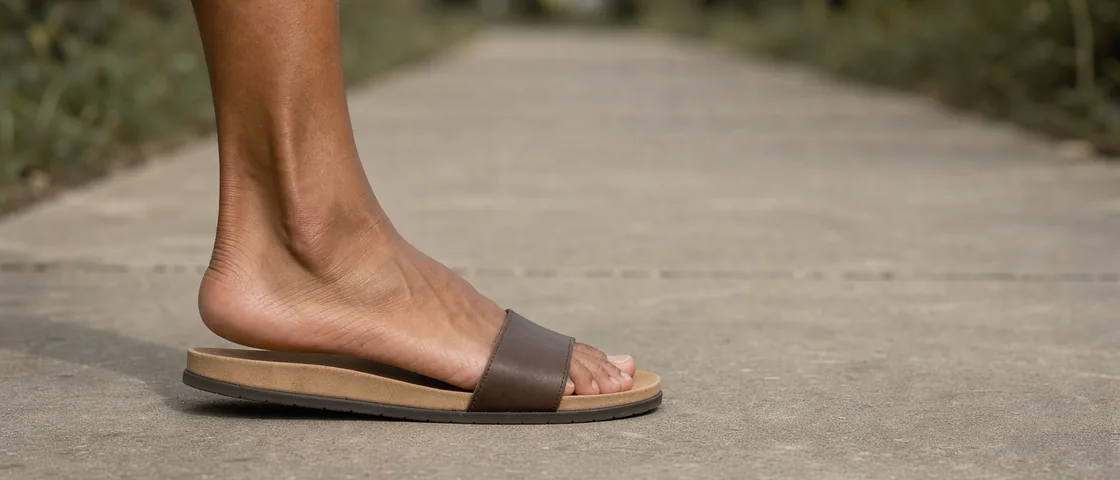
The tendon is visible; whether BPC-157 improves human movement still needs evidence.
For a reader, the hoped-for result may be as ordinary as walking comfortably again. Less pain, easier movement and a return to activity are things a study can measure in people. Those are the results we'd look for.
One intravenous safety pilot included just two adults and reported no adverse events. Intravenous means into a vein. This was a small safety report, rather than a test of whether an injury healed.
The number matters here: two people can't tell us about uncommon problems or long-term safety. Nor can a quiet safety report establish better movement. It's a finding with a very small reach.
Adding a growth-hormone peptide doesn't enlarge that human study. It creates another question about whether the pairing helps, and what unwanted effects it brings. Confidence can't be borrowed from the other ingredient.
Uncertainty belongs in the safety account
No medical use of BPC-157 carries FDA approval. FDA says it lacks enough human safety information to know whether it would cause harm. That's a gap in knowledge, rather than reassurance that no problems occur.
The blood-vessel finding raises a theoretical question about cancer, because tumours also use new blood vessels. This is reasoning from the vessel-growth mechanism, not evidence that BPC-157 causes cancer in people. Human studies haven't settled that concern.
FDA lists BPC-157 among withdrawn nominations on its safety page, current April 22, 2026. Taking back that request doesn't give pharmacies permission to compound it. For an injury or health concern, a licensed U.S. clinician can assess established care; a repair hypothesis can't replace that conversation.
Keep the hoped-for result concrete.
A comfortable walk needs evidence about people walking, rather than a stronger repair story.