CJC-1295 needs its full name in the conversation.
With CJC-1295, one name can hide an important difference. We want to know which form was studied before deciding what a hormone finding tells us about a proposed pairing.
First, name the form
CJC-1295 is based on growth-hormone-releasing hormone, one of the body's signals to the pituitary gland. It's meant to encourage that gland to release growth hormone. We need more than that shortened name to follow the research.
One form has an attachment called DAC, short for drug affinity complex. Think of it as a chemical hook. It binds to albumin, a common blood protein, which helps the compound stay in circulation.
FDA treats forms with and without DAC as different active ingredients. It also flags confusing names as a safety concern. This isn't a small spelling detail: a claim needs to identify what it's talking about.
The human study of the long-acting form found raised growth hormone and IGF-1 for days. IGF-1 is another growth-related signal. Those measurements belong to the form tested, rather than every substance carrying a similar name.
A longer signal is still a signal
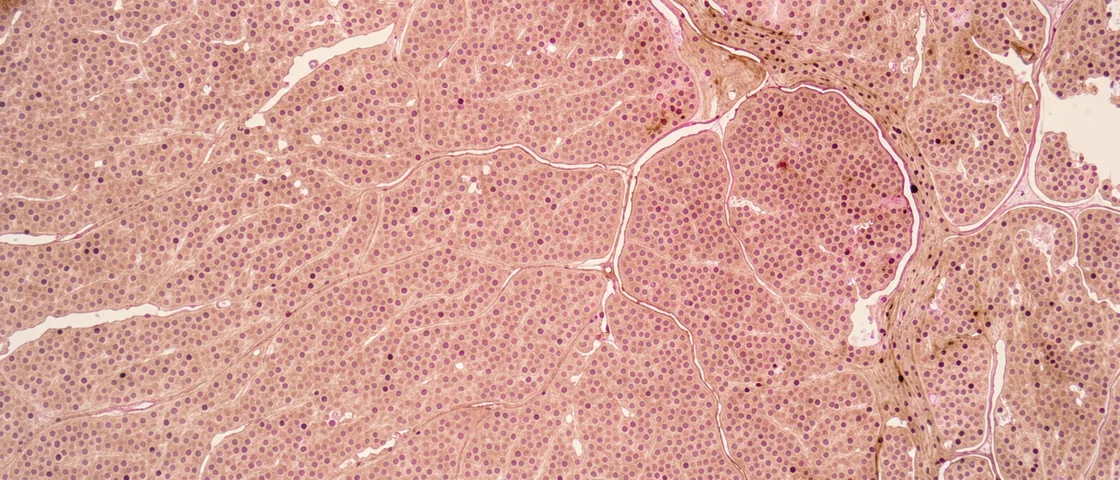
The pituitary releases growth hormone; the studies followed its levels over time.
A longer effect can sound like a better effect. It isn't automatically one. Duration tells us how long something happens; it doesn't tell us whether the person sleeps better or gets back to activity sooner.
A second study found that growth-hormone bursts continued during CJC-1295 stimulation. That's useful information about the pattern of release. It still isn't a result about everyday recovery.
Now add a second peptide to the story. A longer signal and a shorter one may sound like a tidy partnership. Their different timing gives researchers an idea to test, rather than a finished answer.
We'd want the pairing compared with its individual parts. We'd also want the exact forms named, a useful outcome measured and enough follow-up to learn about harms. The extra ingredient has to earn its place.
Duration doesn’t settle safety
CJC-1295 has no FDA-approved use. FDA reports faster heart rate and flushing-type reactions. Its review also raises possible risks associated with increased growth hormone, including blood-sugar changes and fluid retention. Those possible risks aren't proof that every harm occurs.
CJC-1295 sits among the withdrawn nominations on FDA's safety page, whose current date is April 22, 2026. The safety concerns remain there. A withdrawn nomination grants no compounding permission and does not put CJC-1295 in Category 1.
For a health concern, a licensed U.S. clinician can consider established treatments and your circumstances. These hormone studies don't provide a personal plan. We can keep an interesting finding without asking it to answer more than it measured.
Which form did the study test?
That detail belongs beside the finding, every time.